Intervention in the ruins of a roman bath house – design for the Reuse Italy competition (Honorable Mention)
Curinga, Italy
Project: Amanda Manhães, Gustavo Leal, Isabelle Tiemi, Lucas Marques
Drawings: Amanda Manhães, Gustavo Leal, Isabelle Tiemi, Lucas Marques
Awards: Honorable Mention (5th place) in the design competition Reuse the Thermae by ReuseItaly
Keywords: Bath house, Ruins, Transformation, Tourism, Public spaces, Wood
Year: 2024
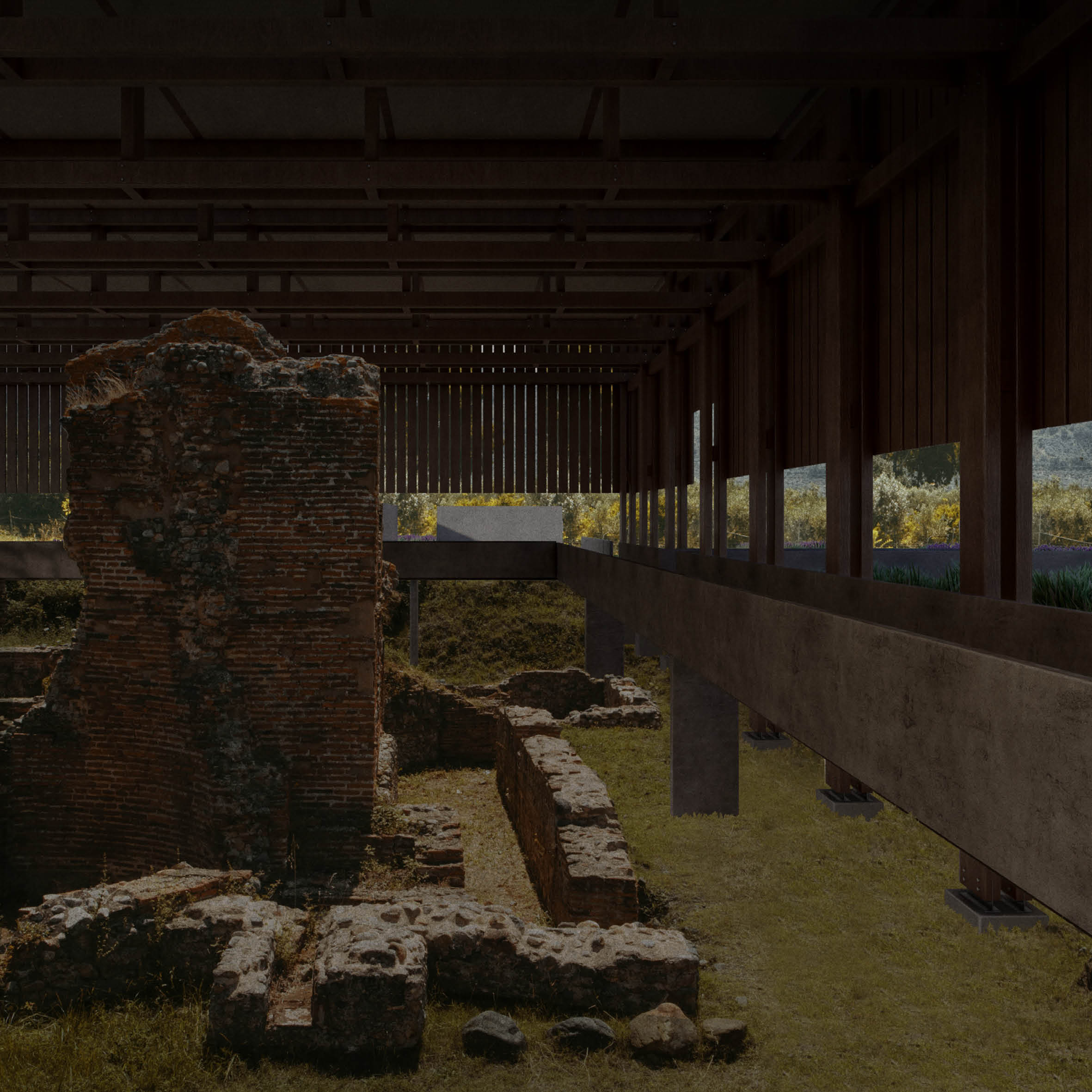
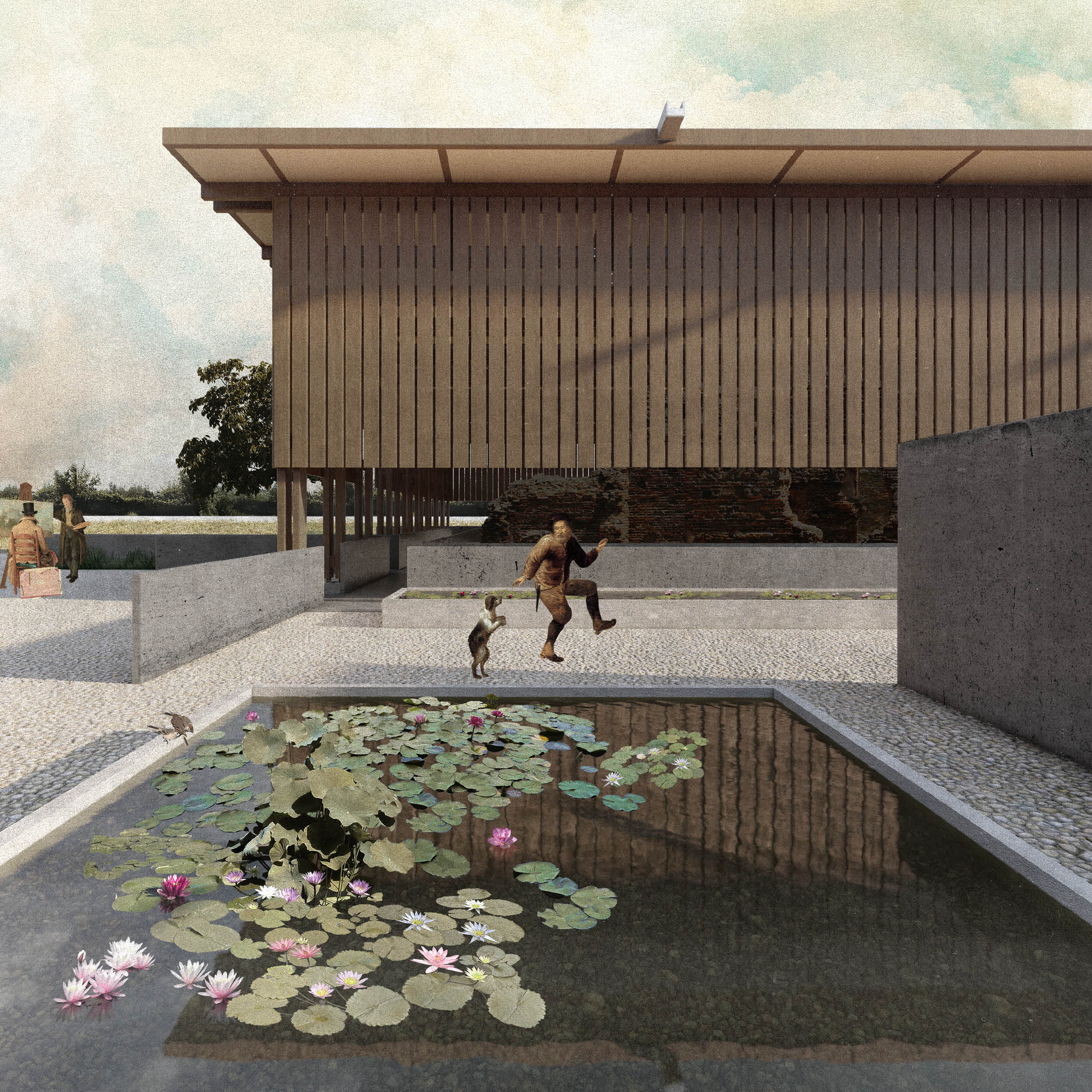
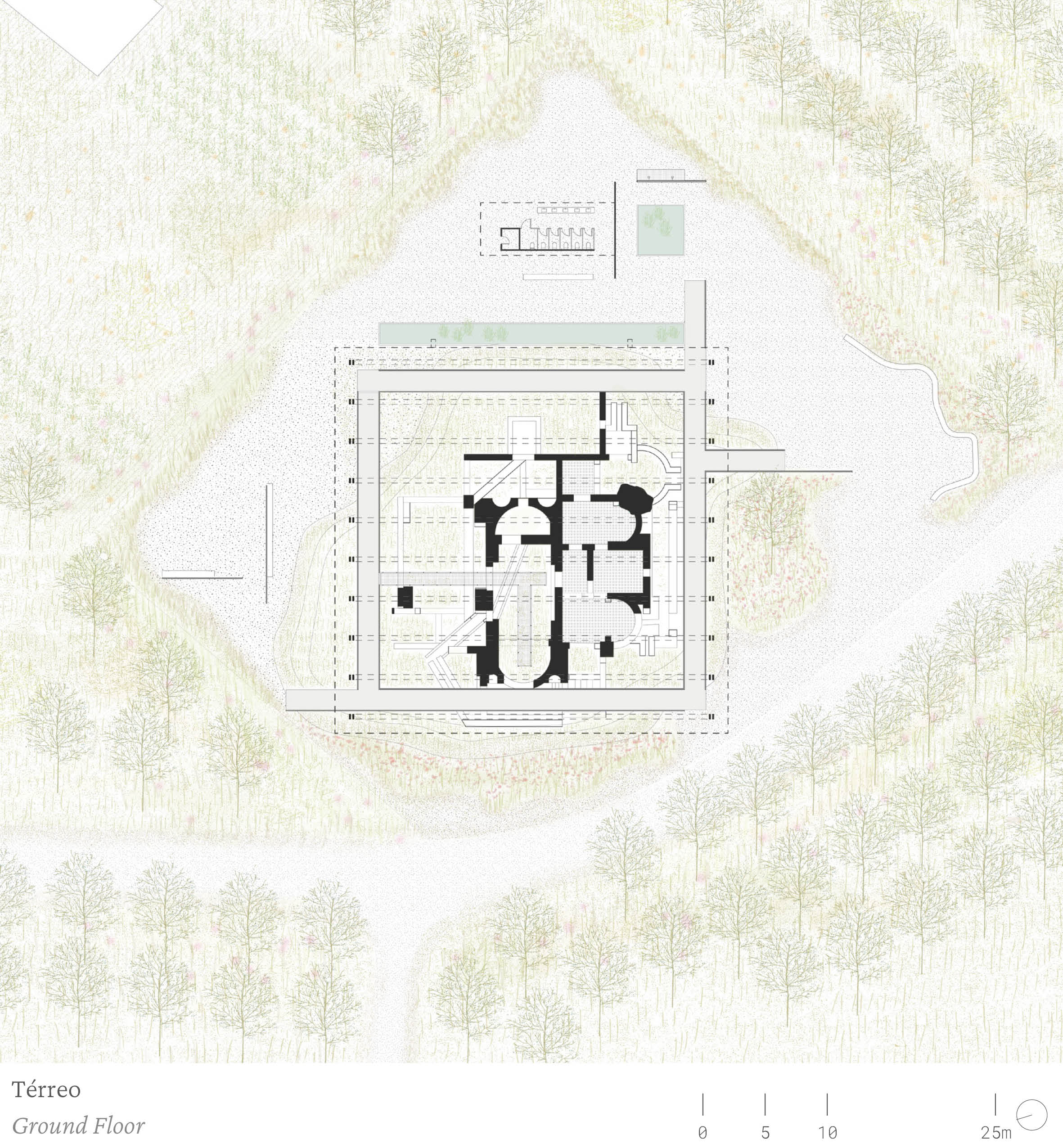
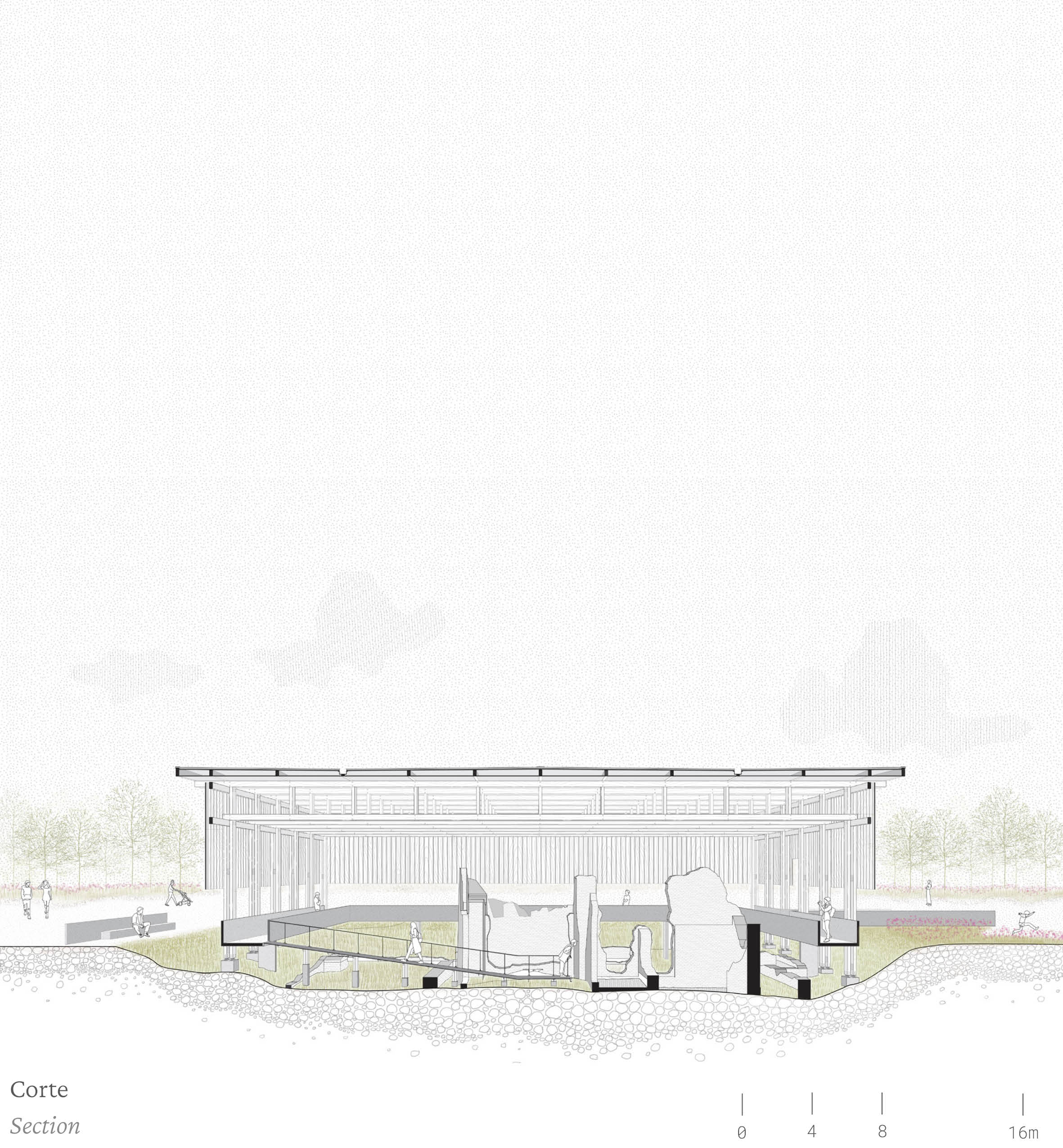
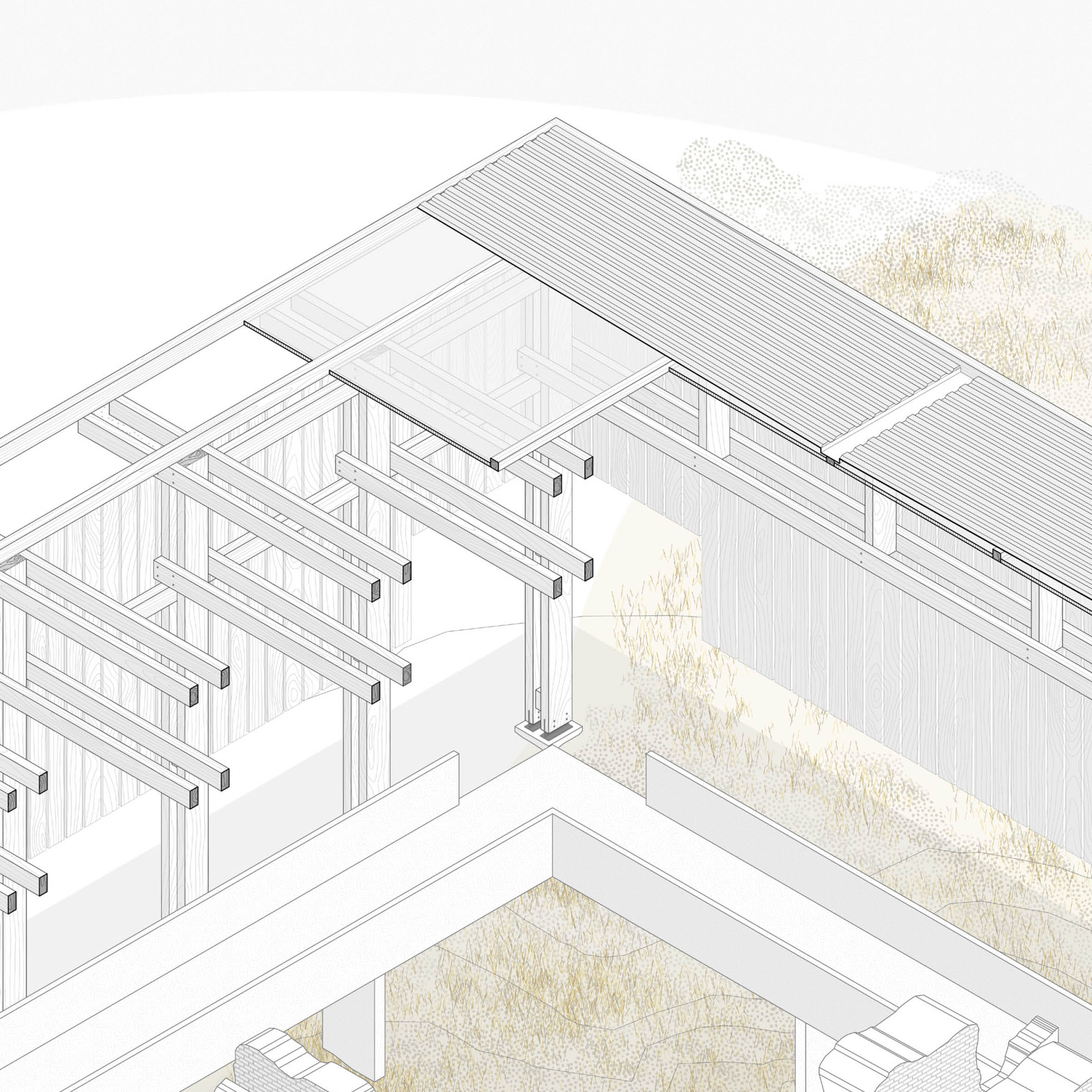
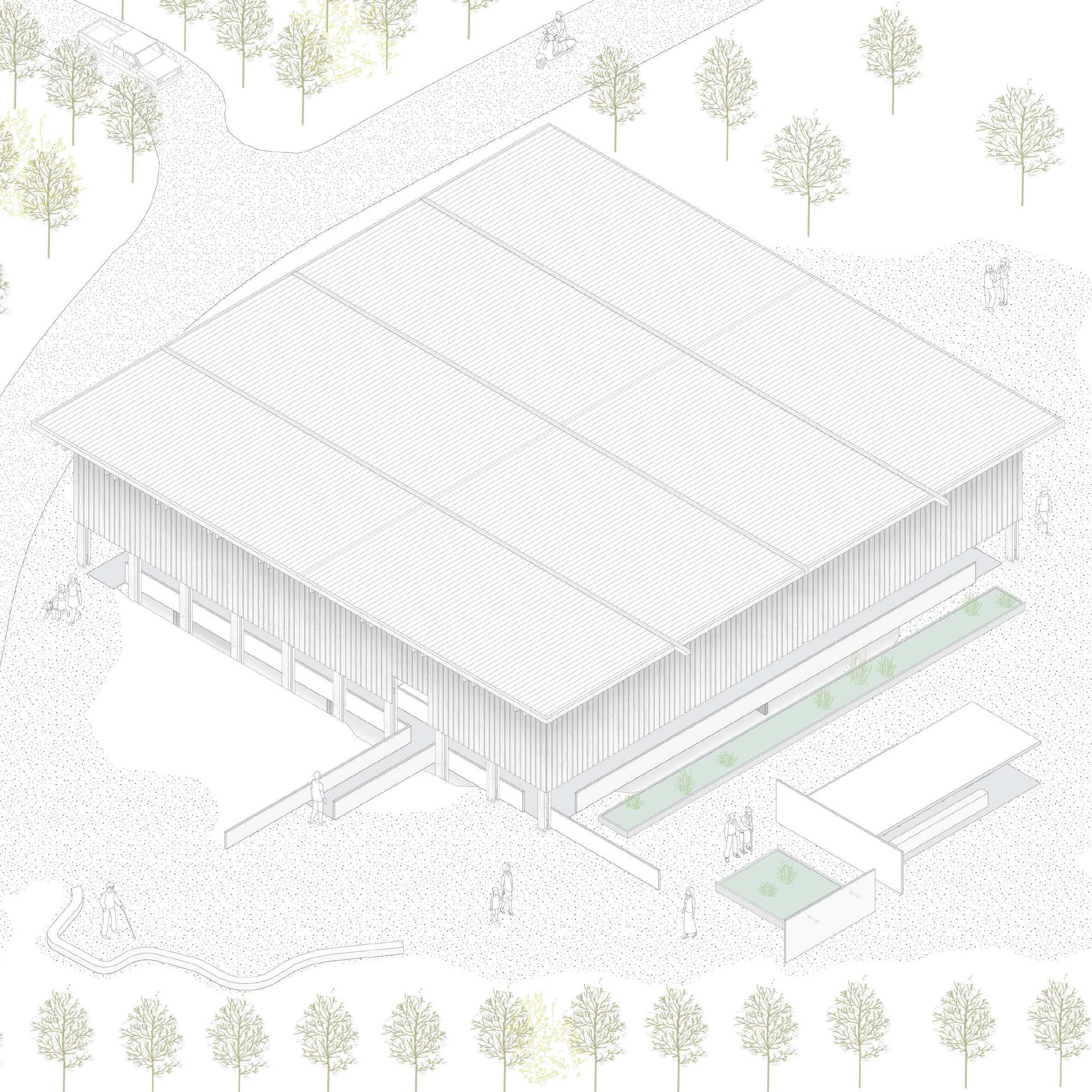
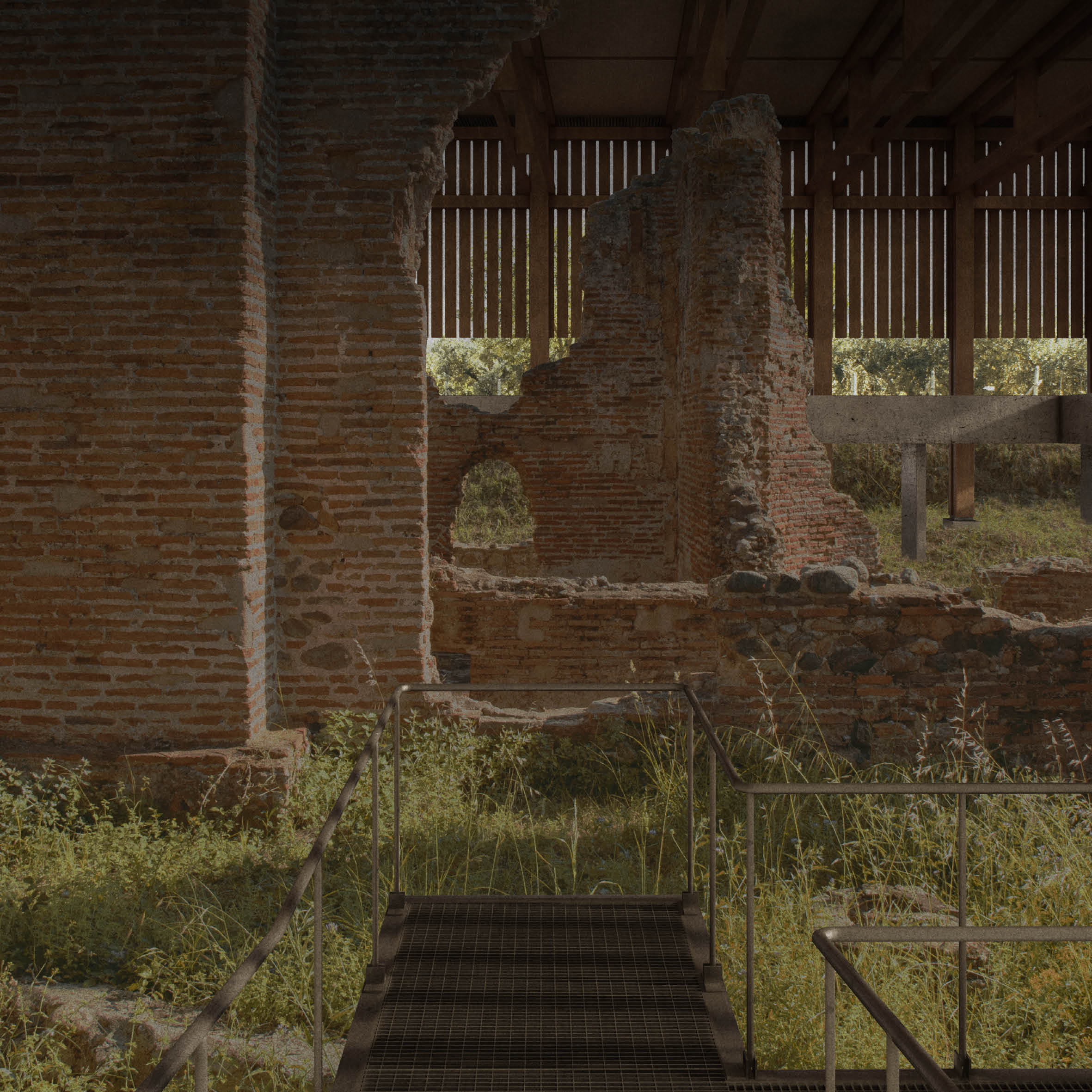
The ruins of the Thermal complex of Acconia Di Curinga preserve the skillful Roman construction techniques from the mid-2nd century. Surrounded by a beautiful landscape amidst mountains and olive trees, the robust brick walls design spaces that tell us stories of an ancient time, continuing to instigate and awaken the curiosity of our contemporaries. With the aim of preserving and guaranteeing the integrity of the Thermae against the effects of bad weather, while making it accessible to visitors and providing a new use for the complex, this design proposal sought to solve these demands by conceiving a lightweight architecture that would have the least possible impact on the ancient ruins, while remaining harmonious and distinguishing between the modern intervention and the historical ruins.

We took advantage of the large spans obtained through the use of the structure in Glued Laminated Timber (Glulam). The pavilion’s elaborate pillar-truss system allowed us to protect the Thermae with as few pillars as possible. The adoption of this construction system considered, in addition to its functional and aesthetic aspects, its origin from renewable sources, using reforestation wood. The wooden structure creates a visual effect marked by its lines, both vertical and horizontal. In contrast to this structure, the elevated footbridge frame is made of molded in situ reinforced concrete, as well as a light steel elevated footbridge.
The adoption of these elevated footbridges makes the complex accessible to visitors, who can now enjoy the space more deeply without posing risks to its preservation. The proposal also includes a small square whose landscape design surrounds the thermal complex, providing space for visitors to stay and contemplate. Different wall plans direct visitors’ eyes to the elements present in the landscape of the square and the Terme pavilion. Amidst the lavender, rosemary, and sage beds, we designed water mirrors to bring back the presence of water in the thermal complex, where a charming garden emerges with aquatic species such as water lilies and papyrus. All rainwater is collected by the roof through gutters that drain into these water mirrors.
In some parts of the square, we have showers that aim to encourage visitors to cool their feet, rescuing a fragment of the memory and use of water in this space. Lastly, we designed a few benches, a small restroom pavilion, and a maintenance deposit, considering the site to be a place for people to gather around the Terme, contemplating its history and beauty, and enjoying this moment.


