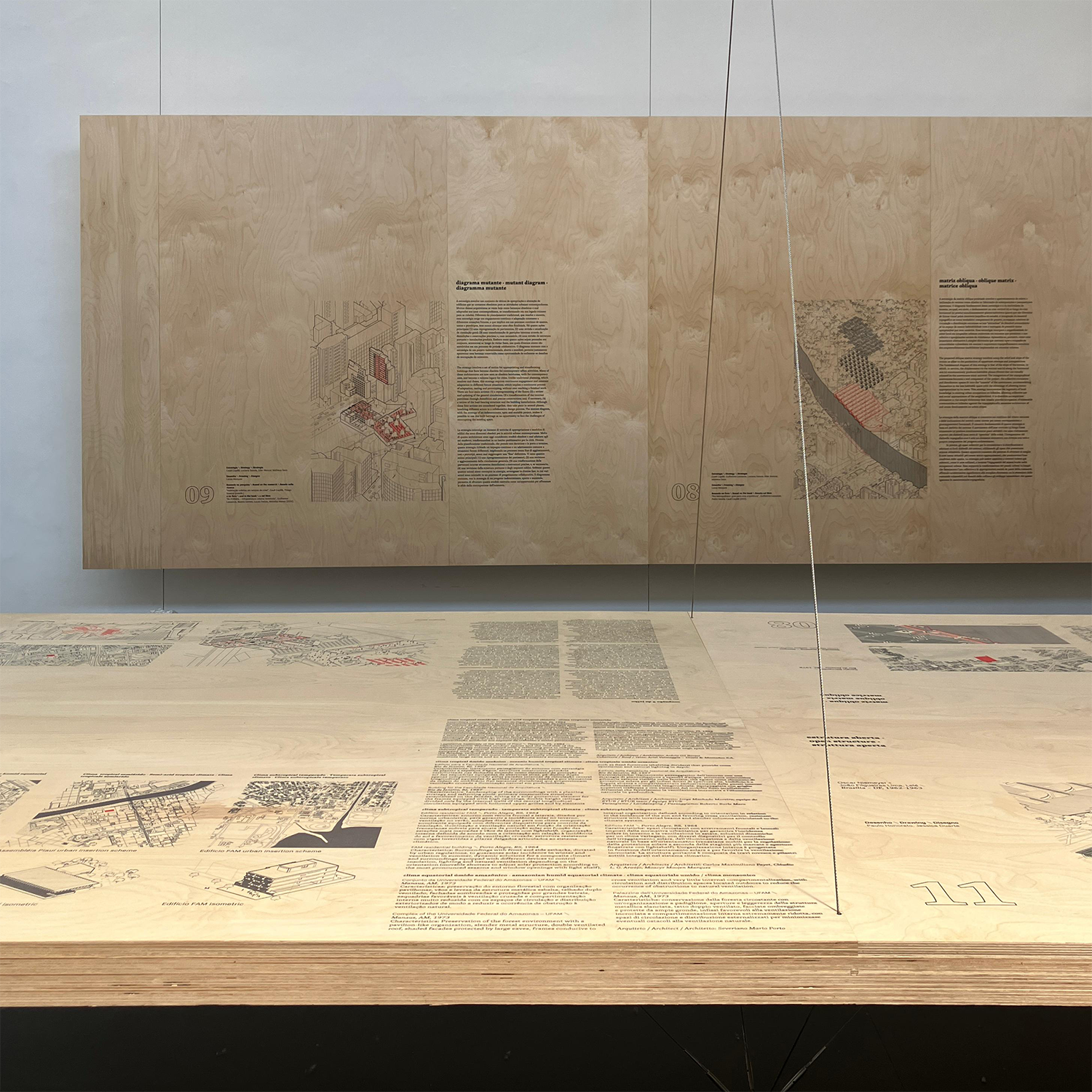
Drawings for the Exhibition ‘(RE)INVENTION’ by Plano Coletivo for the 19th International Architecture Exhibition of the Biennale Architettura 2025
Venice, Italy
Curators: Luciana Saboia, Eder Alencar e Matheus Seco [Plano Coletivo]
Plano Coletivo: Luciana Saboia, Eder Alencar, Matheus Seco, André Velloso, Carolina Pescatori, Cauê Capillé, Daniel Mangabeira, Guilherme Lassance, Henrique Coutinho, Sérgio Marques
Researchers and Collaborators: Ana Barone, André Cavendish, Eduardo Neves, Dilton Almeida, Francisco Pugliese, Guilherme Messias, Júlio Pastore, Leandro Cruz, Paola Ferrari
Drawings: Carolina Guida, Isadora Furtado, Isaac Alencar, Jéssica Duarte, João Magnus, Leonardo Nóbrega, Lucas Bandeiras, Lucas Freitas, Lucas Marques, Luíza Ceruti, Marcela Peres, Paulo Honorato, Pedro Cardoso, Victor Suarez
Visual Design: Lia Tostes
Photography: Ana Mello, Joana França, Manuel Sá, Rafael Salim, Kim Capillé
Executive Production: Camilla Cadette Ferreira, Dorinha Santos
Local Production: eo | a architects – Mateo Eiletz, Claudia Ortigas
Press office: Fernando Pereira, Index, Sam Talbot
Video and photo documentation: Rafa Jacinto, Francisco Bellé Bresolin
Editorial and design: Adriano Campos, Luciana Araujo, Nina Nunes, Rafael Falasco
Copyediting and translation: Bruna Paroni, Guilherme Ziggy, Mariana Nacif Mendes
Social media: Julia Murari, Marina Fonseca
Executive Assistance: Beatriz Reiter, Marcella Batista
Acknowledgements: Coletivo Levante, Diego Gurgel, joão Magnus, Juliana Andrade, Liz Sandoval, Ludmila Andrade, Marcos Cereto, Marta Moreira, Milton Braga, Movimento Sem Teto do Centro, Rafael Dietzsch, Ricardo Trevisan, Rita Velloso
Keywords: Exhibition, Reinvention, Axonometry
Learn more at: https://www.labiennale.org/en/architecture/2025
Year: 2025
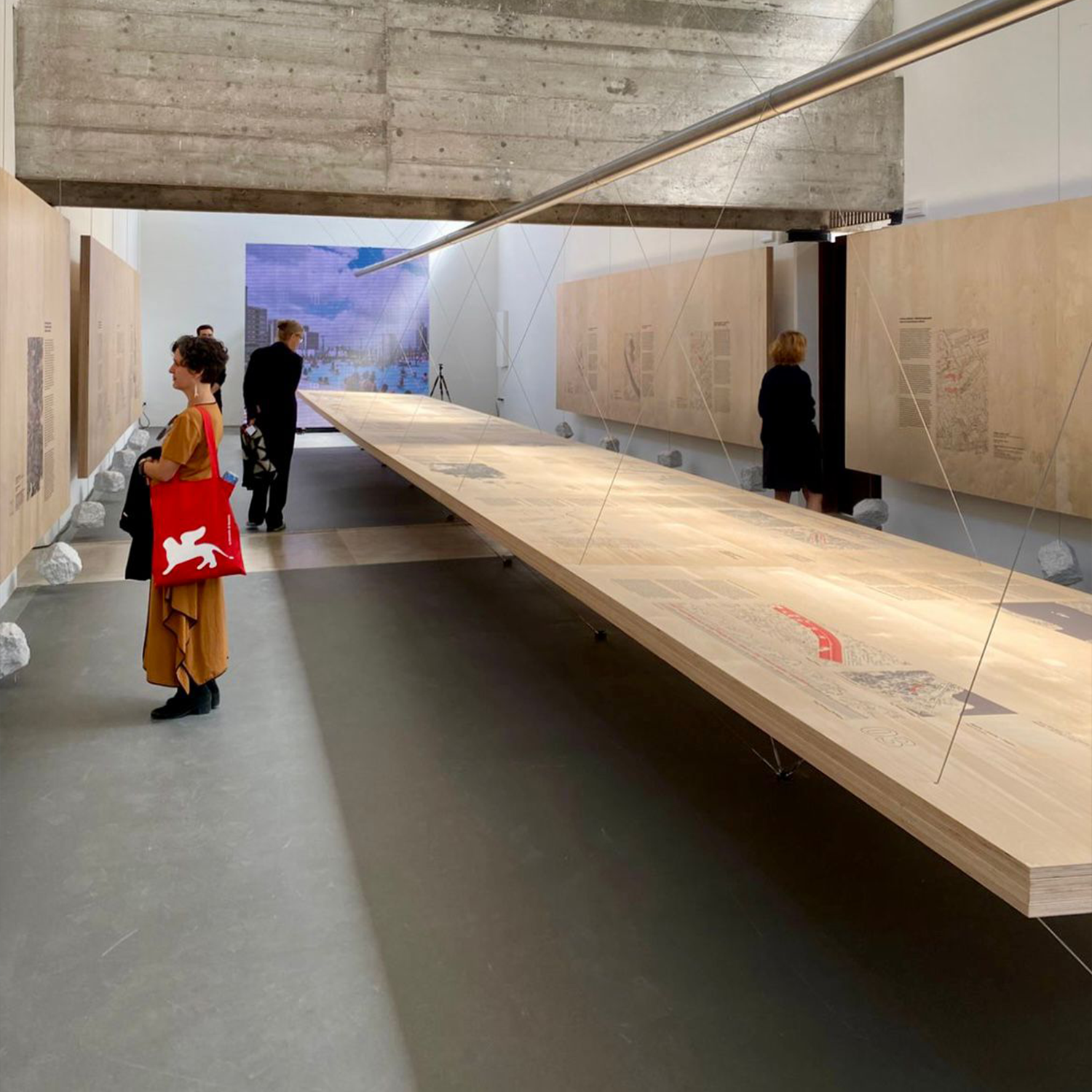
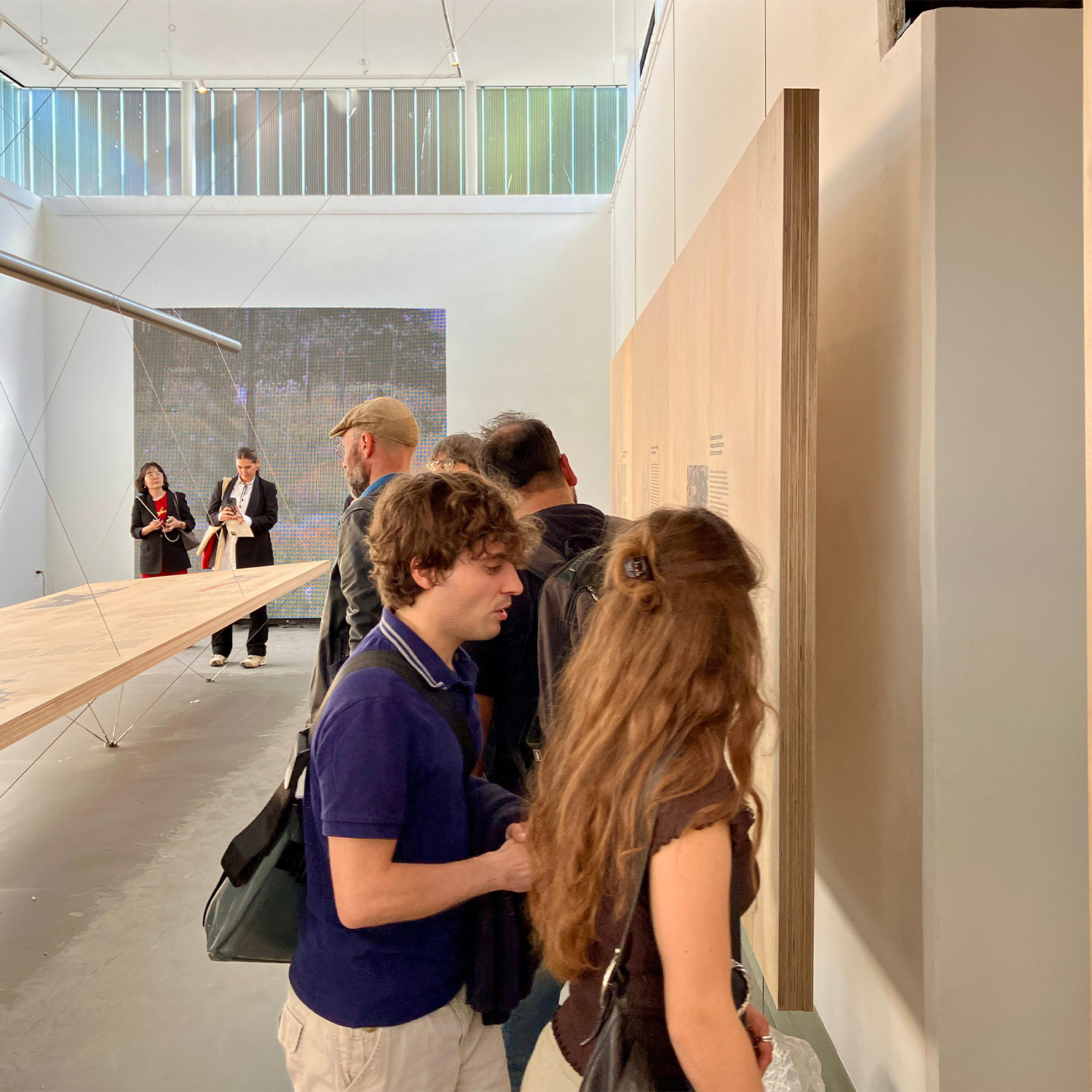
Photography: Cauê Capillé
This exhibition is the result of a decades-long partnership between the Fundação Bienal de São Paulo and the Brazilian Federal Government, represented by the Ministry of Culture and the Ministry of Foreign Affairs. By joining forces in this initiative, they reaffirm Brazil’s commitment to strengthening the global dialog on art and architecture. As part of the larger context of the 19th International Architecture Exhibition: Intelligens. Natural. Artificial. Collective., we once again have the opportunity to present to an international audience the richest thing we have: the Brazilian culture.
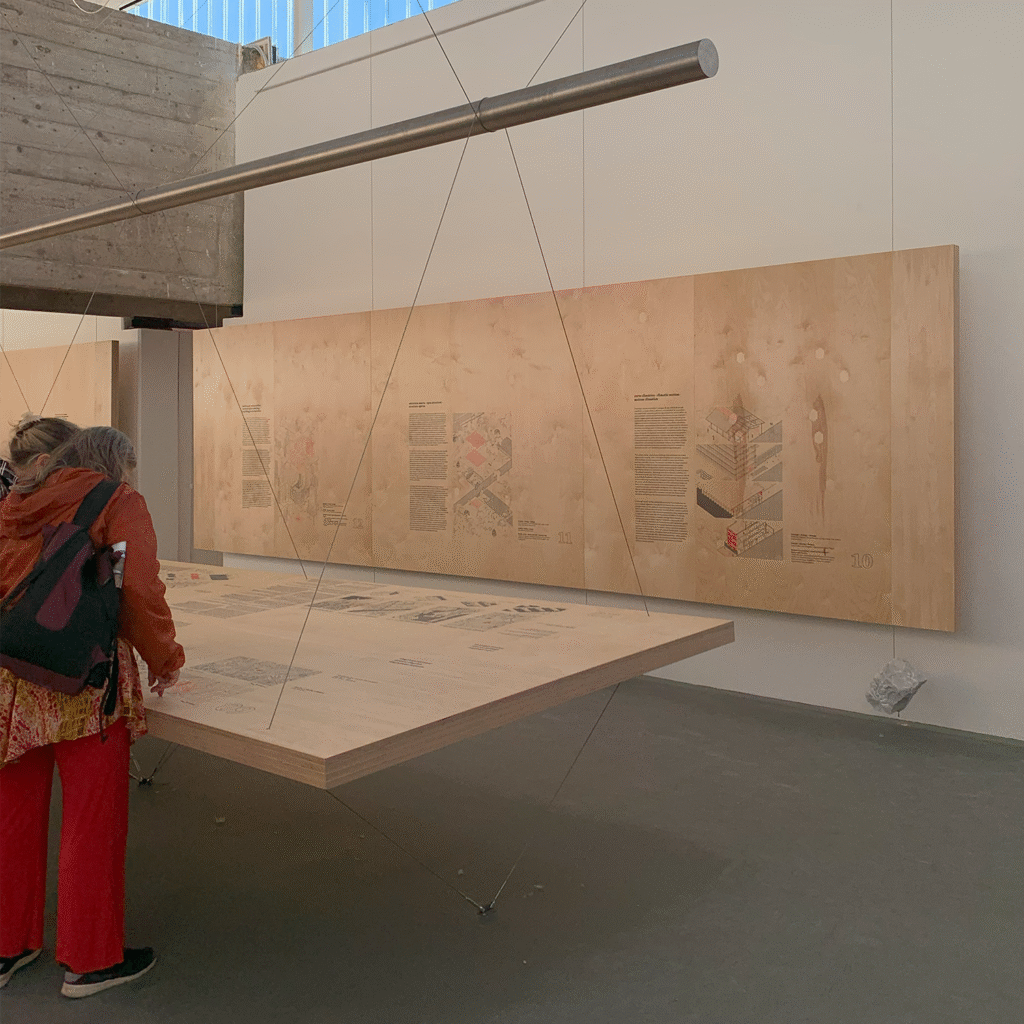
Photography: Maria Morena
The (RE)INVENTION exhibition invites us to learn from ancestral practices, exploring the symbiosis between humans, land and nature as a path to a more sustainable future. The content presented here highlights the importance of strategies that reconcile a true commitment to the planet, and is the direct result of the work and creativity of a team led by curators Luciana Sabio, Eder Alencar and Matheus Secco, from Plano Coletivo.
The exhibition inaugurates another achievement in the Brazil Pavilion itself, which now features a new configuration thanks to the restoration of the building’s original design. Designed by Giancarlo Palanti, Henrique Mindlin and Walmyr Lima Amaral, this pavilion has been home to the latest Brazilian art and architecture since 1964, and its restoration underscores the Fundação’s vocation to preserve and maintain Brazil’s cultural and architectural heritage, as has been the case with the Ciccillo Matarazzo Pavilion in São Paulo for almost seventy years.
Presented in two acts, (RE)INVENTION builds a narrative that spans time and territories. In the first act, the exhibition shows how, more than 2,000 years ago, Indigenous peoples shaped the landscapes around them, creating sophisticated infrastructures that integrated technical knowledge and strategies for adapting to the environment. The Indigenous peoples piled up the soil to create embankments on which they built their wooden and straw houses, often arranged in circular structures that formed interior courtyards. These inhabitants would reoccupy the same site for periods of two centuries and then leave in migratory cycles along the black water rivers in this balanced exploration in search of new territories. Significant anthropic modifications, based on an open relationship with nature and the absence of rigid forms of plant and animal control, established adaptations in nature, such as the so-called terra preta de índio (Indian black earth), and the creation of new landscapes. Ingenious inventions in the rainforest.
The second act shifts the focus to contemporary Brazil, exploring the nuances of the relationship between architecture and infrastructure, as well as the possibilities of re-signifying the city through a curation of architectural research, processes, and practices. In this way, the focus is on the possibility of recognizing and valuing design strategies and operations “encapsulated” in the ingenious production inherited and appropriated in search of social equity and ecological balance. Design operations that prioritize inventive strategies over rigid theoretical structures.
The Brazilian Pavilion proposes a debate on tradition and inventiveness, based on what exists, in order to find creative solutions to complex phenomena in a world that has already been transformed. The aim is to update and suspend the problem in order to consider the contradictions and question the socio-environmental conditions of the contemporary city and its territories. This is a call to architects all over the world to re-examine the issue of infrastructure projects, to expand and improve them for the collective benefit of societies and, beyond them, for our planet in crisis on this increasingly degraded planet. (Source: https://bienal.org.br/biblioteca/participacao-brasileira-19-biennale-architettura-2025-reinvencao-publicacao-digital/)